Four players play counterclockwise with 106 tiles: the starter gets 15, others 14. The indicator makes the next number in the same color the real joker, wrap…
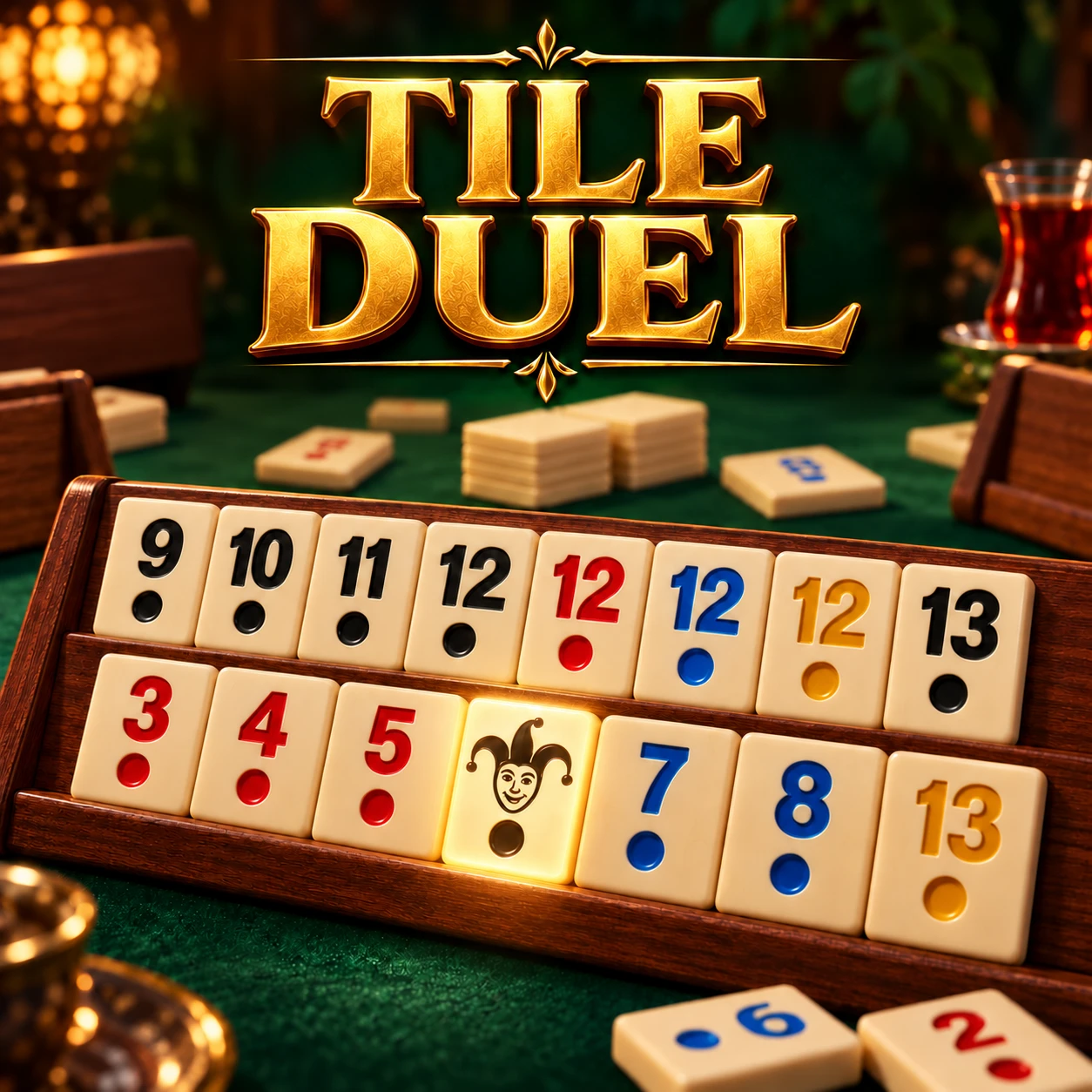
Four players play counterclockwise with 106 tiles: the starter gets 15, others 14. The indicator makes the next number in the same color the real joker, wrapping 13 to 1; the false joker represents that exact tile. Runs contain at least three consecutive numbers of one color, groups three or four equal numbers of different colors, and pairs two identical tiles. Runs never wrap 13–1. Leave empty rack slots around each combination; descending runs count too. A three-tile group scores its number; four colors add 1, while three 13s score 17. A run scores the middle number of its highest three tiles plus 1 per extra tile: 1–7 = 6 + 4 = 10. A pair scores its number once. Initial run opening requires 17; later openings must beat the current threshold. Pair threshold is the run threshold × 1.5, rounded up. Below-threshold laying is provisional: if insufficient when discarding, laid tiles and discard return to the rack. Take an opponent’s discard only to use it in a newly laid combination that turn; otherwise the attempted discard rolls it back. Opening type stays fixed: pair players may lay more pairs and attach individual tiles to existing runs, but cannot lay new runs. Run players may lay pairs only onto an opened pair player, who receives a penalty per pair. Attach at most one tile per end per turn. Attaching or replacing an opponent’s joker charges its owner represented number × 10, with × 2 for each involved pair player. A newly laid joker cannot be replaced that turn; group joker removal requires completion of all four colors. Always retain a final discard to finish. Drawing the last stock tile ends the round after discarding. Unopened base penalties by joker color: red 400, black 500, yellow 600, blue 800. Opened hands cost 10 per remaining tile, with pair and joker-finish factors; winners receive −40/−50/−60/−80. Attempted playable-tile discard costs 100, or 200 for a pair player, and returns the tile. A real joker may be discarded only to finish; other attempts incur the base penalty and pair factor. Earlier penalties remain. Finishing directly from the rack uses either runs or pairs; if nobody has opened, base penalties are × 4. Lowest total penalty wins. The round scoreboard includes current penalties. Move tiles with mouse or touch; double-click or double-tap flips a real joker. A facedown joker can only move on its rack.
Four players play counterclockwise with 106 tiles: the starter gets 15, others 14. The indicator makes the next number in the same color the real joker, wrapping 13 to 1; the false joker represents that exact tile. Runs contain at least three consecutive numbers of one color, groups three or four equal numbers of different colors, and pairs two identical tiles. Runs never wrap 13–1. Leave empty rack slots around each combination; descending runs count too. A three-tile group scores its number; four colors add 1, while three 13s score 17. A run scores the middle number of its highest three tiles plus 1 per extra tile: 1–7 = 6 + 4 = 10. A pair scores its number once. Initial run opening requires 17; later openings must beat the current threshold. Pair threshold is the run threshold × 1.5, rounded up. Below-threshold laying is provisional: if insufficient when discarding, laid tiles and discard return to the rack. Take an opponent’s discard only to use it in a newly laid combination that turn; otherwise the attempted discard rolls it back. Opening type stays fixed: pair players may lay more pairs and attach individual tiles to existing runs, but cannot lay new runs. Run players may lay pairs only onto an opened pair player, who receives a penalty per pair. Attach at most one tile per end per turn. Attaching or replacing an opponent’s joker charges its owner represented number × 10, with × 2 for each involved pair player. A newly laid joker cannot be replaced that turn; group joker removal requires completion of all four colors. Always retain a final discard to finish. Drawing the last stock tile ends the round after discarding. Unopened base penalties by joker color: red 400, black 500, yellow 600, blue 800. Opened hands cost 10 per remaining tile, with pair and joker-finish factors; winners receive −40/−50/−60/−80. Attempted playable-tile discard costs 100, or 200 for a pair player, and returns the tile. A real joker may be discarded only to finish; other attempts incur the base penalty and pair factor. Earlier penalties remain. Finishing directly from the rack uses either runs or pairs; if nobody has opened, base penalties are × 4. Lowest total penalty wins. The round scoreboard includes current penalties. Move tiles with mouse or touch; double-click or double-tap flips a real joker. A facedown joker can only move on its rack.
Solo
Solo: exactly seven rounds against three CPUs with fair random dealing. Only completed matches count; your lowest total penalty is your record. Public ranking requires consent.
Online
Online: two to four humans; CPUs fill empty seats. Two humans sit opposite, three need one CPU and four none. Shared round/final scores; solo records are separate.